 Blog
BlogReviews9 min read
Top Udemy Courses for Web Development in 2026
Real recommendations from people who actually built things after finishing them—covering Angela Yu, Colt Steele, React, Python, Django, and Full Stack AI.

Alex RiveraAug 30, 2026
Courses that teach you how to actually edit and tell stories, not just which buttons to click—covering creative editing, DaVinci Resolve, Premiere Pro, After Effects, and sound design.

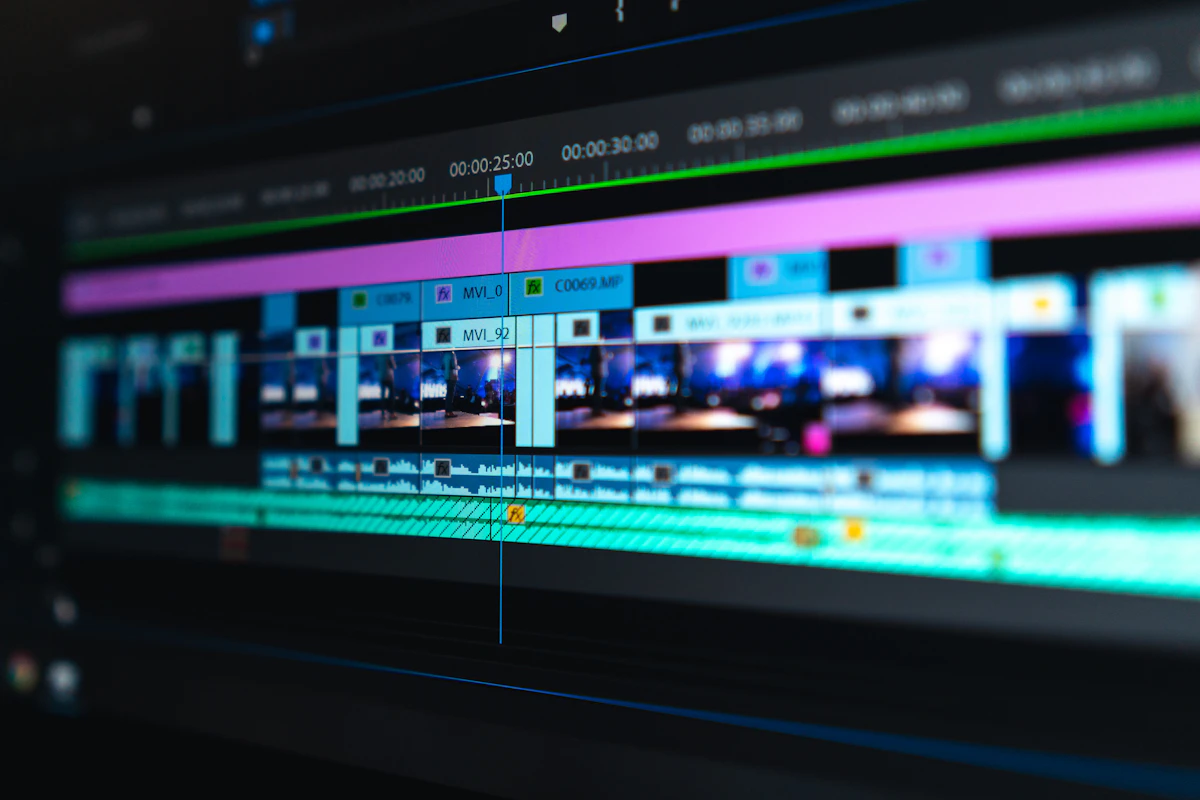
Most video editing courses teach you software. They show you where the buttons are, how to apply effects, and which menus to use for each task. Finish one and you will know how to operate the program. You will not necessarily know how to make something good.
The courses on this list are different. Some of them do not even focus on software. They teach the part of editing that most tutorials skip entirely: how to structure a story, how to pace a sequence, how to use sound to carry emotion, and how to make creative decisions when the footage is difficult. That is where real editing skill lives, and what separates working editors from those who stay beginners for years.
Paddy Bird is a veteran professional editor with over 40,000 hours in the cutting room across documentaries for the BBC, ITV, Channel 4, National Geographic, ABC, and NBC. He spent years searching for a course that taught high-level creative editing and couldn't find one, so he built it himself. The result is widely regarded across the filmmaking community as the definitive creative editing masterclass.
The course provides 30 hours of in-depth tutorials across 12 chapters alongside 35 hours of professional uncut documentary footage to practice with. You aren't watching someone else edit a pre-approved timeline—you are cutting real scenes from a real broadcast documentary, making real editorial decisions, and developing your own instincts.
"I've been an editor for over twenty years. When I was starting out I looked everywhere for some course or book that could teach me the creative side of editing. There are many courses that teach software but nothing on the creative process. Then I found Inside The Edit. They did it. They cracked the code."
Best for: Anyone serious about becoming a truly skilled narrative or documentary editor, regardless of whether you cut in Premiere Pro, DaVinci Resolve, Avid, or Final Cut.
Film Editing Pro was created to teach creative editing through genre-specific masterclasses. The lead instructors have Hollywood credits on blockbuster titles including Batman v Superman, Deadpool, and Star Wars: Rogue One. The curriculum reflects true studio post-production workflows rather than academic theory.
Their catalogue includes dedicated courses for Trailer Editing, Action Editing, Drama Editing, and Music Editing—each accompanied by professionally shot multi-camera scenes and Hollywood-grade sound stems for students to download and edit.
"I signed up for the Trailer Editing course and because of what I learned, I landed a trailer editor job in LA. It was such a relief on my first day to see all the projects at work broken down exactly like how it is taught in this course. I was able to jump right in."
Best for: Editors who want to master specific commercial genres like theatrical trailers, action pacing, or dramatic storytelling with real studio raw footage.
Sven Pape (A.C.E. nominated editor with credits for James Cameron and Sundance festival selections) has built one of the most respected filmmaking channels on YouTube: This Guy Edits. His comprehensive paid program, The Go-To Editor, deconstructs the psychology of editing, emotional pacing, dialogue cutting, and the collaborative dynamics between editor and director.
"Sven is one of those rare teachers who explains not just the technique but the 'why' behind every cut decision. This Guy Edits is unmatched for storytelling and understanding what the edit is trying to achieve."
Best for: Editors who feel technically fluent with their NLE software but want to cultivate stronger creative instincts and narrative confidence under deadline pressure.
DaVinci Resolve has become the industry standard for color grading and is rapidly emerging as a premier all-in-one editing and post-production platform. Because the standard version is completely free, it offers the most accessible route into professional post-production. Casey Faris has created one of the most lucid, well-paced tutorial libraries available for learning Resolve from zero.
Casey covers the full suite: the Cut and Edit pages, color wheels and node trees, Fusion node-based visual effects, and Fairlight audio post-production.
Best for: Beginners who want a complete, professional-grade editing and color grading suite without spending money on software subscriptions.
Adobe After Effects is the standard tool for motion graphics, titles, and compositing. Editors who possess motion design capabilities command significantly higher rates and enjoy greater employability. School of Motion’s free 30 Days of After Effects series on YouTube provides an exceptionally structured curriculum for learning motion design foundations.
Best for: Video editors looking to expand into motion graphics, lower thirds, title design, and basic visual effects.
Created by visual effects pioneer Andrew Kramer, Video Copilot remains one of the most revered After Effects resources on the internet. The tutorials walk through practical compositing, particle effects, 3D camera tracking, and cinematic VFX.
Best for: Anyone interested in learning visual effects and compositing from the fundamentals up to cinematic shots.
Both of these podcasts feature in-depth discussions with master editors cutting major Hollywood feature films and prestige television. Listening to how working professionals troubleshoot difficult footage, communicate with directors, and shape dramatic arcs provides insights that standard software tutorials cannot match.
While written primarily for screenwriters, Robert McKee's Story is mandatory reading for editors. It explains how scenes function, how value shifts build tension, and why certain narrative structures feel resonant. Understanding story mechanics directly enhances your cutting instinct.
You will not improve simply by watching tutorials. You improve by making cuts. The tutorials provide principles and terminology, but growth happens when you sit down with unedited footage, face awkward pauses or bad camera angles, and make executive editorial choices.
Use the raw footage provided in these courses. Cut every exercise, experiment with pacing, and build a showreel of completed scenes.
Lead Product Designer at Tutorialbar. Specializing in UI/UX systems, visual design principles, and creative tooling workflows.
Continue learning with more curated tutorials and roadmaps.
BlogReal recommendations from people who actually built things after finishing them—covering Angela Yu, Colt Steele, React, Python, Django, and Full Stack AI.
 Blog
BlogHonest picks with real learner feedback so you know what you are actually signing up for—covering Python, SQL, Tableau, Statistics, IBM, and Google Certificates.
 Blog
BlogHonest reviews and real course picks for anyone starting out in design—covering design theory, Photoshop, Illustrator, logo design, and social media graphics.
Instructor coupons expire fast — often within hours of reaching 1,000 enrollments. Join our Telegram channel for instant alerts when new verified coupons drop.